



New Beginnings!

NEW YEAR, new days, new beginnings

New Year’s Day in Japan is called Ganjitsu or Gantan.  Each year, many Japanese travel to shrines and temples to pray for blessings for the year ahead to an “unknown god” (Acts 17: 28).  Even Japanese Christians with unbelieving families can fall into group  pressures of praying before shrines and miss a wonderful opportunity to share the good news of Jesus.  

But the God of the Bible does not live in temples made by human hands (Acts 7: 48). The first line in the Bible says, “In the beginning God” (Gen. 1:1).  Before anything was created God was there!  He is before and above all things and most worthy of worship! 

Later, John 1:1 simply says, “In the beginning was the Word, and the Word was with God, and the Word was God.”   Jesus is the Word that became flesh to live with us and in us by His Spirit. 

Jesus came not seeking anything from us but to give us the life we could never have apart from Him.  When Jesus came, He came not to modify our old lives or make slight improvements.  He came not to make bad people into good people, but to make people entirely new inside out.  “Therefore, if anyone is in Christ, he is a new creation. The old has passed away; behold, the new has come” (2 Cor. 5: 17).  

Even in our sufferings, hardships and trials, we can trust that He is faithful and makes all things beautiful in its time! One day Jesus will return and make all things new (Rev. 21: 5).

As you prayerfully anticipate 2024, 

1. What has Jesus changed in your heart this past year?  What areas of your heart need a fresh touch from Him?  

2. Starting this January, how might your daily life reflect the God of all new beginnings? 

3. How does being made new in Jesus change how you use your time, talent, gifts, skills, ability and treasures?  

We recommend starting a new Bible reading plan or daily

meditations from scripture below.

a) Start with New Testament with 5 Minutes a day in 5 Days a Week | PDF Here. Or Daily ESV Reading Plans | PDF Here. Or access 10 other plans here. TGC Daily Devotional Reading Plan | PDF Here. These are all free plans.

b) Daily Light on The Daily Path | A Devotional Classic by Samuel Bagster | Free of charge. Sign up to read here with the App. This is a personal favourite for the soul. It takes you to different Bible themes each morning and evening, with parallels, good for memorization, short reflection or praying the scriptures even in the midst of busy schedules.

c) Finally, 100 % of our lives and belongings come from God’s hand. If you want to give back to God 10 % monthly to advance His glorious Gospel in Tokyo, you can now give via credit cards in Japan, or bank transfer (furikomi) or via our office in the U.S. Read Gospel-motivated giving here.

こたつと飼葉桶

こたつと飼葉桶

ゾリーナ・ジョーイ牧師

(この考察は2021年に書かれたものを、再掲載しています。) 

READ ENGLISH VERSION HERE.

昨年の10月、私たちは老朽化したアパートから、典型的な日本らしい家に引っ越しました。ー こたつを除いて。多くの日本の家には「玄関」と「こたつ」があります。こたつとは、テーブルの裏に暖房器具がついており、布団をかけて暖まるものです。凍てつく冬の夜、家族がこたつに足を入れてくつろぐ、暖かさ、快適さ、親睦の象徴です。クリスマスは私たちの目を、飼い葉桶に向けさせます。赤ちゃんが「天国のこたつ」の快適さを離れ、私たちの厳しい世界に生まれてきました。

クリスマスの慌ただしさ、イルミネーションや飾り付けの中で、その漠然とした、よく知る場所を見過ごしてしまいます。 慣れ親しんでいると、驚くべきことがぼやけてしまうのです。飼い葉桶は、普通の赤ちゃんにさえ似つかわしくない、相応しくない場所でした。しかしそれが、神が私たちを探しに来られた場所だったのです。

人類の歴史は、役目を果たしてくれる救世主を探し求めることに奮闘する終わりのない旅です。政治家、経済界のリーダー、富豪、有名人、金融投資家、知識人、宗教指導者、導師、哲学者、医療や技術の専門家など、様々な人々の中から、私たちは救世主を探し求めます。彼らは私たちの最も差し迫った必要に、一時的な解決策を提供してくれるかもしれません。しかし、私たちの最も深く、最も大きな病に対する答えを誰が与えてくれるでしょうか?

クリスマスとは、一見退屈で、寒く、見過ごされ、平凡で漠然とした場所、つまり日常生活の何気ない瞬間に、神であるイエスが私たちと共にいてくださることを意味します。天使の聖歌隊は、教会や神殿ではなく、野原にいるごく普通の羊飼いたちに現れました(ルカ2:8)。イエスは、見過ごされ、疎まれ、嫌がらせを受け、無力な者と同一化するために生まれました。社会のはみ出し者、最も弱い者、最も無視された者のところに来られたのです。

イエスは御父の家のこたつの快適さを捨てられました。弱い赤ちゃんとして、私たちの冷たい世界に来られたのです。王衣ではなく、布に包まれて。宿屋にイエスの居場所はありませんでした。(ルカ2:7)しかし、イエスは私たちにこう言います。「わたしの父の家には、住む所がたくさんあります。そうでなかったら、あなたがたのために場所を用意しに行く、と言ったでしょうか。」(ヨハネ14:2) イエスはヘロデの宮殿ではなく、飼い葉桶で生まれました。シーザーの家系ではなく、ダビデの家系でした。飼い葉桶には、プロの神学者も、宗教指導者も、祭司もいませんでした。イエスだけでした。

シーザーは他者を抑圧するために権力を握りました。イエスは私たちを救うために権力を手放されました。シーザーは玉座に上がりましたが、イエスは飼い葉桶に降りて来られました。 「ことばは人となって、私たちの間に住まわれた。」(ヨハネ1:14)。飼い葉桶から木の十字架にかけられた救い主は、いばらの冠をかぶりました。ー 罪人たちと一緒に。「ひとりの男の子が私たちに与えられる。」(イザヤ9:6)。

イエスは私たちへの贈り物です。私たちが罪を持っていくと、イエスは赦しを与えてくださります。痛みを持っていくと、癒しを与えてくださります。悲しみを持っていくと、喜びを与えてくださります。悩みを持っていくと、平安を与えてくださります。私たちが汚れたぼろ布を持っていくと、義の衣を与えてくださります。イエスは飼い葉桶の中で、私たちと共におられます。十字架の上でも共におられます。墓の中でも私たちと共におられます。イエスは、最も孤独で、最も暗く、最も苦しい時に、私たちと共にいてくださります。時代の終わりまで、私たちと一緒にいてくださる神なのです。

イエスは私たちの心の部屋に居場所を見つけられるでしょうか?イエスは私たちの心の奥底にある考えや想像を占めてくださるでしょうか?クリスマスの日を超えて、私たちの予定にイエスの居場所があるでしょうか?部外者が私たちの交わりの中でイエスを見ることができるでしょうか? 私たちはイエスの恵みの食卓につくでしょうか? 慈愛に満ちた母親に抱かれ、守られ、そこに赤ちゃんのイエスは横たわっておられました。イエスは私たちをそのように扱っておられます。そっと、優しく、一人息子を決して見捨てない母のように、私たちを気遣ってくださります。私たちの涙がこぼれる静かな音を聞いてくださります。 私たちの鼓動を感じてくださります。イエスは近くにおられます。「 兄弟以上に親密な友人もいる。」(箴言18:24) それはイエスだけです。

内省のための質問 | 

  • 2024年のカレンダーを見るとき、あなたのスケジュールの中にイエスと過ごす時間はありますか?

  • あなたの心の客間に居場所のなかったイエスが、御父の家にあなたの居場所を持っておられるとしたら、あなたの心の中で閉ざされていて、隠れている、イエスを迎える必要のある領域は何でしょうか?

  • 今年のクリスマスに、あなたの家庭、近所、職場や教会で、親切な行為、肯定的な言葉、惜しみないプレゼント、励まし、祈りや助けの手を用いて、誰を祝福できるでしょうか?


All copyrighted | Advent Reflections, Joey Zorina, previously published on 11th Dec. 2021


The Kotatsu and the Manger

The Kotatsu and the Manger

By Joey Zorina

(This reflection was previously published in 2021 and republished here).

Read Japanese version HERE

Last October, we moved from our dilapidated apartment to a newer traditional Japanese house—minus the kotatsu table.  In many Japanese houses, there’s the genkan (entrance), and a room with a kotatsu table.   The kotatsu table is a symbol of warmth, comfort, and fellowship in icy wintry nights, as family members tuck their feet under warm electric blankets.  Christmas takes our eyes away to that manger, where a baby leaves the comforts of a “heavenly kotatsu” to be born into our harsh world. 

Amid the Christmas rush, lights and decorations, it is easy to overlook that obscure familiar place.  Familiarity can blur the wonder!  The manger, an unlikely and unsuitable place even for an ordinary baby, was where God came looking for us.   

Human history is an arduous and endless journey of searching for functional saviours.  We look for them among the politically powerful, among the marketplace leaders, among the rich, the famous and the financial investors; among public intellectuals, religious leaders, gurus and philosophers; among medical and technological experts.  They may provide temporal solutions to our most pressing needs.  But who can provide answers to our deepest and greatest maladies?  

Christmas means Jesus is God with us in the seemingly boring, cold, overlooked, lowly and obscure places—in ordinary moments of everyday life.  The angelic choir did not appear at the synagogues or temples, but to ordinary shepherds— out in the field (Lk. 2: 8).  He was born to identify with the overlooked, sidelined, harassed and the helpless.   He came to the outcasts, the weakest and most ignored members of His society.  

Jesus left the comforts of His kotatsu table in His Father’s house.  He came as a vulnerable baby into our cold world.  Wrapped in swaddling clothes, not in royal robes.  No place for Him at the inn (Lk. 2: 7).  Yet He tells us: “In my Father’s house are many rooms. If it were not so, would I have told you that I go to prepare a place for you?” (Jn 14: 2).  Born in a manger, not in Herod’s palace.  He came from the house of David, not Caesar’s household.  No armchair theologians, no religious leaders or priests in the manger.  Only Jesus.  

Caesar rose to power to oppress others.  Jesus gave up power to rescue us.  Caesar rose to a throne, but Jesus came to a manger.  The Word became flesh and dwelt among us (Jn. 1: 14). From the manger to a wooden cross, we find our Saviour with a crown of thorns— in the company of sinners.  “For to us a son is given” (Is. 9: 6)). Jesus is a gift to us.  We bring our sins, He gives us forgiveness.  We bring our pain, He gives us healing.  We bring our sorrows, He gives us joy.  We bring our troubles, He gives us peace.  We bring our filthy rags, He gives us robes of righteousness.  He is with us in the manger.  He is with us on the cross.  He is with us inside the grave.  He is with us in the loneliest, darkest and most painful moments.  He is God with us even to the remotest ends of the age.  

Will He find room in the chambers of our hearts?  Will He occupy our inmost thoughts and imaginations?   Will He find a place in our calendar beyond Christmas Day?  Will outsiders find Him in our fellowship?  Will we come to His table of grace?  Held and protected in the tender care of His affectionate mother—there lay baby Jesus.  That’s how He deals with us. Gently and tenderly He cares for us, like a nursing mother who will never forsake her only child.  He hears our silent tears trickle.  He feels our heartbeats.  He is near.  There is a friend who sticks closer than a brother (Pr. 18: 24).  ​Only Jesus.  

QUESTIONS FOR REFLECTION |

  • As you look at your calendar for 2024, is there space to spend time with Jesus in your schedule? (Recommended free online Daily Light on The Daily Path Classic Devotion).

  • If Jesus who had no place in the guest room has a place for you in His Father’s house, what closed and hidden areas in your heart do you need to welcome Jesus?

  • Who are the people in your homes, neighborhoods, workplaces or church you can bless with acts of kindness, words of affirmation, generous gift, encouragement, prayers and helping hand this Christmas?

All copyrighted | Advent Reflections, Joey Zorina, previously published on 11th Dec. 2021


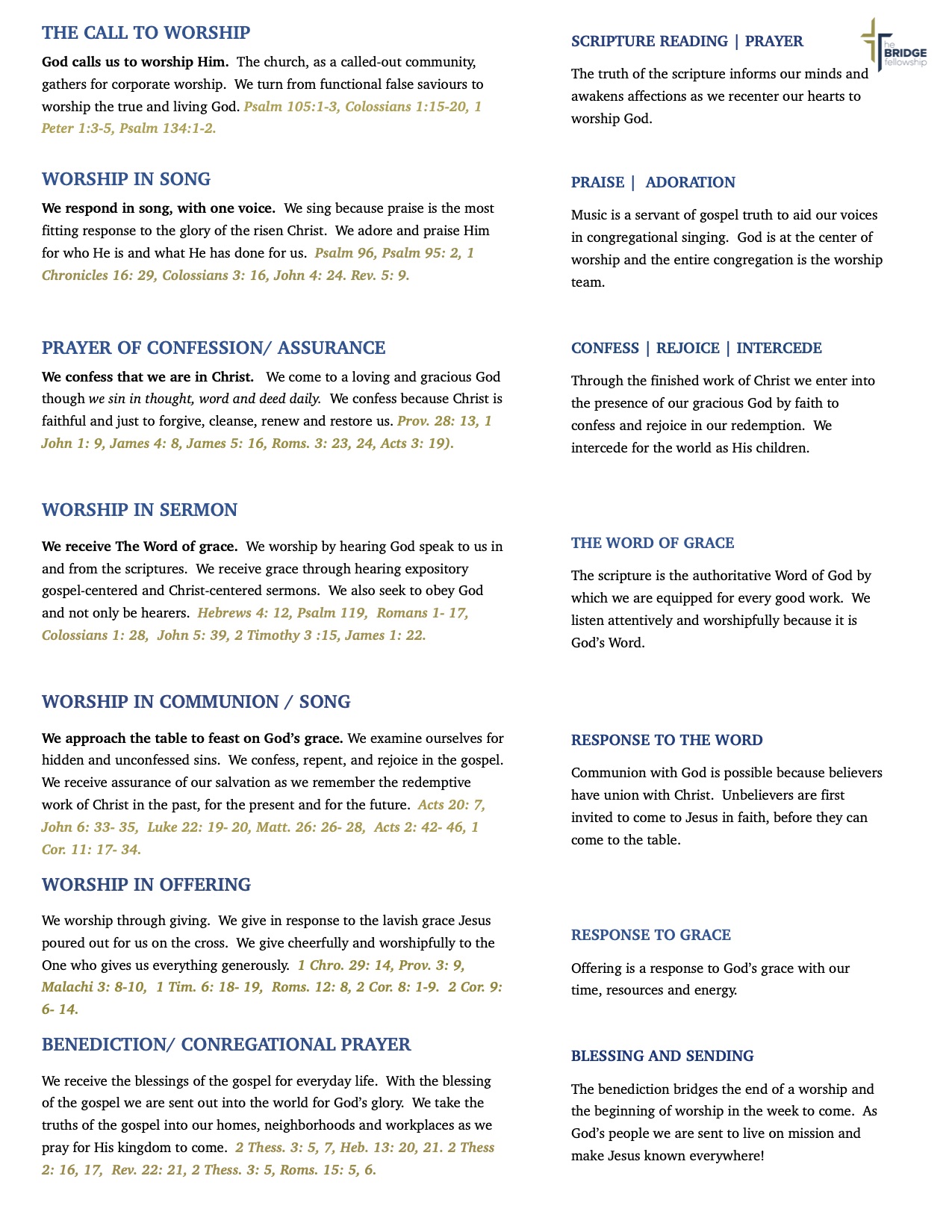
Why Each Element in Our Worship Matters

Download a copy here.

Every Sunday, several people come early to set up despite their own weaknesses and struggles. They are truly commendable because they set up to minimize distraction during our worship. We can all relate with Martha who was distracted, anxious and troubled about many things while serving (Luke 10: 41). Jesus said to Martha, “one thing is necessary. Mary has chosen the good portion, which will not be taken away from her” (v. 42). We see that Mary was commended for sitting at Jesus’ feet and listening (Luke 10: 39). We bring nothing before God but our weaknesses, struggles, heartaches, sins and sufferings. But God’s lavish grace meets us in our mess. The warm welcome of Jesus is for weary, wounded and exhausted sinners. He is not seeking perfect saints and those who have it all together to worship Him. Our restless hearts can now find their rest in Jesus’ finished work on the cross.

For this reason, coming early for corporate worship has certain benefits! In an age of digital distraction our attention span has been drastically cut short. It is easy to miss the various elements in our worship. Therefore, creating that sacred space to catch our breath and reset our minds in prayer before worship starts can be really beneficial! We have one hour and thirty minutes on Sunday to worship together as a church family.

Therefore, it can be beneficial to arrive at least 10 to 5 mins before worship starts and hear the welcome of Jesus and the call to worship. It’s even better if we are able to come earlier to greet people and engage in pre-worship fellowship if God has given us the strength. And/ or stay for post-worship fellowship to reach out to people we haven’t met, to listen to one another, encourage one another and pray for one another. Below is why each element in our worship matters!

With The Two Thieves on The Cross   

|  GOOD FRIDAY Meditation | With The Two Thieves on The Cross |  

|  Luke 23: 39–43 |

39 One of the criminals who were hanged railed at Him, saying, “Are you not the Christ? Save yourself and us!”   

There are multiple ways in which man is trying to save himself. Ever since our forefather Adam wanted to be his own lord and saviour, we have been looking to save ourselves perpetually. Like this criminal it’s easy to rail at God saying, “If you are really the son of God, save yourself and us.” Many of us want to be saved from our temporal sufferings and problems, but our sins can blind us to our deeper need of saving grace.

All throughout the years, many people have asked: “Why is there so much suffering in a world with a good God?”  But very few have paused long enough to consider: Why does God allow so much good to happen to people who sin against Him?  Why is there so much good happening to a sinful world ?  If God is holy why would He allow so much good to happen to people who constantly fail to meet His standards?  

40. But the other rebuked him, saying, “Do you not fear God, since you are under the same sentence of condemnation? 41. And we indeed justly, for we are receiving the due reward of our deeds; but this man has done nothing wrong.” 42. And he said, “Jesus, remember me when you come into your kingdom.” 43 And he said to him, “Truly, I say to you, today you will be with me in paradise.” 

The other criminal rebuked the one who railed at Jesus, saying, “Do you not fear God, since you are under the same sentence of condemnation?”  He realizes that he is under the same sentence of condemnation!  And he says, “we indeed justly, for we are receiving the due reward of our deeds.”  In other words, we are receiving exactly what we deserve.  God does not owe us something better than this!  There is no room for self-justification because everything we’ve done we’re directly sinning against a holy God.  We have prefered other things which are not God as though they are God.  And we are receiving the due reward of our deeds.   “But this man [Jesus]  has done nothing wrong,” he says.  

Yet, here Jesus is condemned among common criminals.  Instead of cursing the Romans and insulting Jesus, the other criminal says: “Jesus, I don’t deserve to be rescued from these troubles and sufferings.  I deserve this rightly.  But you don’t.  Jesus, remember me when you come into your kingdom.  All I ask is that you remember me.  Will you remember me?  That’s all I ask, Jesus.”  And Jesus says to him, “Today, you will be with me in paradise.”  Jesus’ response is grace-based, not merit-based.  

He says, “Today,” not tomorrow, “Today, you will be with me in paradise.”  He does not say: “After you’ve done everything I’ve asked you, you will be with me in paradise”   No.  “Today, today, you will be with me.” This thief has done nothing to deserve to be with Jesus in paradise. Yet that is the promise of the Saviour!  None of us could do what Jesus asks of us. We fail at forgiving others.  We could never love our enemies in our own strength.  But Jesus did what we could never do.  He received the just condemnation for our sins, in order that we might be fully forgiven.  

The greatest injustice was suffered by Jesus on the cross, for us.   In fact, verses 44 to 46 describe Jesus’ darkest hour.  God’s judgment came upon Jesus in order that we might receive forgiveness for our sins.  Jesus received what He did not deserve in order that we might receive what we did not deserve.  Jesus came to take away the eternal suffering we should have experienced.  He died the death we deserved on the cross, in order that we might live with Him in eternity.   

The greatest of the Kings laid down His life for His people.  Instead of using His power to respond in anger and violence, He forgave His enemies.  Instead of crushing His enemies, He gave His life for them.  Instead of scoffing, He prayed for the  forgiveness of even those who crucified Him.   Nothing more is said of the other thief.   He did not enter paradise, because he received what he deserved.  To the other one, however, Jesus says to him:  “Today, you will be with me in paradise.”  Paradise that was lost after Adam’s fall is paradise restored in Jesus. There was no place as lush green, colorful, rich in food and life-giving as the garden in Eden– this is the paradise which God made. And at the center of that paradise is Jesus. “Today you will be with Me”- Jesus says.

With each passing day and age, death is getting closer and closer.   The question is not if we will die but when we will die.  The two thieves had their chances to be right with God.  One responded with anger and insults.  The other asked Jesus to remember Him and he received grace.  What is your response going to be today?  Will you say with the other thief, “Jesus remember me in your kingdom.”  “Jesus renew me.”  “Jesus forgive me.”  “Jesus restore me.” When you do that, you’ll find He’s always been waiting and granting grace.  There’s paradise, and there’s Jesus waiting.

©This is a sermon excerpt edited which was preached on Good Friday years ago by pastor Joey Zorina.  

How To Hear Sermons 説教の聞き方

Japanese 日本語 below.

Have you ever wondered why sermons seem to pass through our minds without profiting us? Centuries ago, an English evangelical preacher wrote that when we hear sermons, we need 3 things: -

a) Faith. b) Reverence c) Prayer.

He writes,

"It is not enough that we go to Church and hear sermons. We may do so for fifty years, and 'be nothing bettered, but rather worse.' (Mark 5:26) “Take heed,” says our Lord, “how you hear.” (Luke 8:18)

Would any one know how to hear aright?  Then let him lay to heart three simple rules.

For one thing, we must hear with faith, believing implicitly that every Word of God is true, and shall stand. The Word in old times did not profit the Jews, “not being mixed with faith in them that heard it.” (Heb. 4:2)

For another thing, we must hear with reverence, remembering constantly that the Bible is the book of God.  This was the habit of the Thessalonians. They received Paul’s message, “not as the word of men, but the Word of God.” (1 Thess. 2:13)

Above all, we must hear with prayer, praying for God’s blessing before the sermon is preached, praying for God’s blessing again when the sermon is over.

Here lies the grand defect of the hearing of many.  They ask no blessing, and so they have none.  The sermon passes through their minds like water through a leaky vessel, and leaves nothing behind.

Let us bear these rules in mind every Sunday morning, before we go to hear the Word of God preached.

Let us not rush into God’s presence careless, reckless, and unprepared, as if it mattered not in what way such work was done.

Let us carry with us faith, reverence, and prayer.  If these three are our companions, we shall hear with profit, and return with praise."

--J.C. Ryle, Expository Thoughts on Luke (Carlisle, PA: Banner of Truth, 1858/2012), 1: 197. Commenting on Luke 8:16-21).

説教の聞き方

説教を聞いても自分に益のないまま、耳を通り抜けていくように思ったことはありますか?何世紀も前、あるイギリス人の伝道的説教者が、説教を聞く時に大切な3つのことを書きました。

1)信仰 2)敬意 3)祈り

彼はこう記しています。

「教会に行って説教を聞くだけでは不十分だ。50年間それをして、『なんのかいもなく、むしろ悪くなっていた』(マルコ5:26) 『注意しなさい。』『聞き方に注意しなさい。』(ルカ8:18)と主は言われます。正しく聞く方法を知っていますか?ぜひこの3つのシンプルなルールを心に留めてください。

まず、信仰を持って聞かなければならない。すべての神のことばは絶対的に真実だと信じること、そしてそのことばに立つことです。昔、みことばはユダヤ人には益をもたらすものではありませんでした。『みことばが、聞いた人たちに信仰によって結びつけられなかったからです。』(ヘブル4:2)

次に、敬意を持って聞かなければならない。聖書は神のことばであることを常に覚えておきましょう。これはテサロニケの人々の習慣でした。パウロの説教を受けた時、『人間のことばとしてではなく、事実そのとおり神のことばとして受け入れてくれた。』(1テサロニケ2:13)

そして何よりも、祈りを持って聞かなければならない。説教が語られる前に神の祝福を祈り、説教が終わった後もまた神の祝福を祈ります。多くの人は、ここに大きな欠陥があります。祝福を求めないから、祝福がないのです。説教はまるで穴のある入れ物に水を注ぐかのように心から抜けていくので、何も残りません。

毎週日曜日の朝、神のみことばを聞く前に、このルールを覚えましょう。この説教を通しての神の働きがどのように備えられてきたか、まるで関係ないかのように、無配慮、無頓着さ、準備不足のまま急いで神の臨在に入らないようにしましょう。

信仰、敬意、祈りを持ちましょう。もしこれらが共にあるなら、私たちは説教を聞くときに益が与えられ、神への賞賛をお返しするでしょう。


Live Much In The Smiles of God

Robert M’Cheyne, a Scottish pastor from the nineteenth century, is most known for the annual bible reading plan he developed which many people continue to use today.

In this brief excerpt of a letter he wrote to his friend, M’Cheyne writes about his love of Christ. This is so timely in an age where the messages that we breathe in and out tells us to look within us, or look at ourselves to discover ourselves in order to find freedom. Or the other way in some evangelical circles is to read our scriptures in a self-centered way that makes it all about us. Nevertheless, according to M’Cheyne, the way to be free is not to look at ourselves, or within us. The way to be free is to look away from ourselves frequently to Christ— everyday, every moment. He writes:-

Learn much of the Lord Jesus. For every look at yourself, take ten looks at Christ. He is altogether lovely.  Such infinite majesty, and yet such meekness and grace, and all for sinners, even the chief! Live much in the smiles of God. Bask in His beams. Feel His all-seeing. Eye settled on you in love, and repose in His almighty arms.

Cry after divine knowledge and lift up your voice for understanding. Seek her as silver, and search for her as hid treasure, according to the word in Proverbs 2:4. See that verse 10 be fulfilled in you. Let wisdom enter into your hearts, and knowledge be pleasant to thy soul; so, you will be delivered from the snares mentioned in the following verses.

Let your soul be filled with a heart-ravishing sense of the sweetness and excellency of Christ and all that is in Him. Let the Holy Spirit fill every chamber of your heart; and so there will be no room for folly, or the world, or Satan, or the flesh.

I must now commend you all to God and the word of His grace. My dear people are just assembled for worship. Alas! I cannot preach to them tonight. I can only carry them and you on my heart to the throne of grace. Write me soon. Ever yours, etc.

—Rev. Robert Murray McCheyne, (Edinburgh: Banner of Truth, 1966), 293.

In Christ the Father smiles upon us because of what Jesus has done. As we read our scriptures, we find that Christ is altogether lovely.

For every sin we see in ourselves, let’s look ten times at Christ and His finished work.

What is sabbatical rest?

“Come away by yourselves to a desolate place and rest a while.” For many were coming and going, and they had no leisure even to eat.” — (Mark 6: 31).   

Cities are transient. 

Many people come and leave after a while.  Be it church or workplace, University, people are in and out of our lives.  “For many were coming and going.” Just when deep relationships are starting to form, people leave, and we leave too. Working in a cultural context where there is no concept of sabbath rest can drain us emotionally and spiritually.  We are called to serve God in our vocations.  But we also need Jesus’ invitation to go away “to a desolate place and rest a while.”  Without this rhythm of work, rest and renewal, no one can last for long.  

Going away is not always easy.

In Mark’s Gospel, Mark often uses the word “immediately” to describe gospel urgency. Mark’s Gospel is full of action. But in the same Gospel account, Jesus invites His disciples to rest a while. Christians are called to be living sacrifices (see Romans 12: 1) but not burn-out offerings. There is work to be done today, and there are many needs awaiting us tomorrow. In a culture that finds its worth and identity in productivity, it is easy to compare, compete, overwork and idolize immediacy in the workplace and church. It is easy to set a pace that the Spirit is not setting.

But Jesus was led by the Spirit.

He needed times of rest and renewal as He was limited in the flesh.  He needed to get away from ministry busyness to spend unhurried times alone with His Father (see Mark 1: 35, Mark 6: 46).   As people’s demands increased daily, Jesus could see that His disciples were especially exhausted.  So He led them away with Him to rest a while. Even the renowned English prince of preachers once said,

“Rest time is not waste time. It is economy to gather fresh strength….It is wisdom to take occasional furlough. In the long run, we shall do more by sometimes doing less….Let no tender conscience doubt the lawfulness of going out of harness for awhile, but learn from the experience of others the necessity and duty of taking timely rest.” –(Charles H. Spurgeon, Lectures to My Students)

Sabbath rest is not a “break, holiday or vacation” but intentional rest, away from ministry and work demands, where we are not “doing” but being in Christ.  It is a holistic time of rest, reflection, prayer, recreation and be renewed to re-enter work.

Jesus invites us to rest in Him.

Jesus Himself invites us: “Come away by yourselves to a desolate place and rest a while.”  This invitation is sacred.  It is an invitation to rest deeply in Jesus and trust that He is ever present and working—even when we’re away.  Even when we are at rest, He is working out His will and He is able to provide all that we need.

The essence of religion is: “Work hard to prove yourself.”

But the heart of the Gospel is: “Rest in Jesus’ finished work.”

To learn more on what Sabbath rest is and why it matters watch sermon on Sabbath and Gospel Rest from our Gospel Basics Series :-

a) The work for which God made us.

b) The rest for which God made us.

c) The deeper rest Jesus gives to us.

Also read our Work and Rest Rhythms.